 1.png)
The First-Time Buyer's Manual: Finding a Safe, Affordable Student Car Near Smithtown Car Dealerships
Buying a first car is one of the most exciting milestones a young driver can hit. It is also one of the easiest financial decisions to get wrong. For students and first-time buyers shopping at St. James car dealerships, the challenge is not finding a car. It is finding the right car at the right price without taking on more risk than necessary.
This guide walks you through exactly what to prioritize, what budget range actually makes sense, and how to evaluate a used vehicle so you drive away confident rather than guessing.
Why the $7,000 to $10,000 Range Is the Student Car Sweet Spot
There is a common instinct among first-time buyers to stretch the budget as far as possible for something newer. That instinct usually backfires.
A car financed at $18,000 to $22,000 on a student or entry-level income creates monthly payment pressure that makes every unexpected repair feel like a crisis. A car purchased in the $7,000 to $10,000 range, especially from the 2015 to 2019 model year window, gives you something far more valuable: flexibility.
That flexibility means room in your budget for insurance, gas, maintenance, and the occasional repair without derailing your finances. It also means you are not upside-down on a loan the moment you drive off the lot.
What the 2015 to 2019 Model Year Window Offers
This generation of used vehicles hits an ideal intersection of price, reliability, and modern safety features. By 2015, most mainstream manufacturers had standardized backup cameras, electronic stability control, and advanced airbag systems as either standard or widely available options.
Many vehicles from this window earned IIHS Top Safety Pick or Top Safety Pick+ ratings. The Insurance Institute for Highway Safety evaluates vehicles on frontal crash, side crash, roof strength, head restraints, and front crash prevention. Checking the IIHS database for a specific year and model before buying takes five minutes and can tell you more about real-world safety performance than any salesperson's pitch.
Models Worth Looking At in This Range
These are not the only options, but they consistently appear in the $7,000 to $10,000 range and have strong safety and reliability track records:
- Honda Civic (2016 to 2018): IIHS Top Safety Pick+, low ownership costs, widely serviced on Long Island
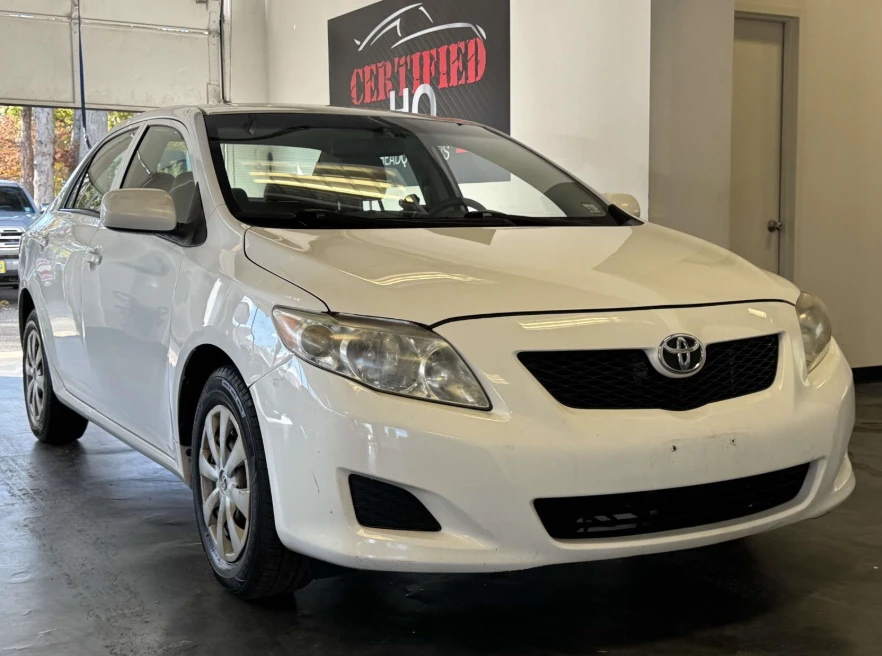
- Toyota Corolla (2015 to 2019): Exceptional long-term reliability, affordable parts, strong resale history
- Mazda3 (2016 to 2018): IIHS Top Safety Pick+, drives well, holds up mechanically
- Subaru Impreza (2017 to 2019): IIHS Top Safety Pick+, standard AWD is a genuine benefit for Long Island winters
- Hyundai Elantra (2017 to 2019): Budget-friendly insurance rates, solid warranty history if original coverage remains
Budget Breakdown: The Real Cost of a Student Car
The sticker price is only part of what you actually pay. First-time buyers who account for the full ownership picture make better decisions.
| Cost Category | $7k to $10k Vehicle | $18k to $22k Vehicle |
|---|---|---|
| Monthly loan payment | $150 to $220 | $340 to $420 |
| Full coverage insurance (est.) | $150 to $200/mo | $200 to $280/mo |
| Annual maintenance budget | $400 to $700 | $600 to $1,000+ |
| Depreciation risk | Low (already depreciated) | High in first 2 years |
The monthly difference between these two purchase tiers can exceed $300. Over a 48-month loan, that is over $14,000 in cash flow staying in your pocket.
What to Check Before You Buy
A pre-purchase inspection from an independent mechanic is always worth the $100 to $150 it costs. In addition, run a vehicle history report through Carfax or AutoCheck using the VIN. Look specifically for:
- Accident history and severity
- Title status (clean, salvage, rebuilt)
- Number of previous owners
- Odometer consistency across reported service records
- Whether the vehicle was used as a rental or fleet unit
At Certified Headquarters, a pre-owned car dealership in St. James, NY, every vehicle in our inventory goes through a multi-point inspection before it reaches the lot. We encourage buyers to ask questions and review any available documentation before they commit.
Choosing the Right Dealership as a First-Time Buyer
Not all Smithtown car dealerships approach first-time buyers the same way. A dealership that earns your trust will walk you through financing options clearly, never pressure you into add-ons you do not need, and give you time to think.
Red flags to watch for include dealers who refuse to share a vehicle history report, pressure you to skip the independent inspection, or quote payments without disclosing the full loan term and interest rate.
Browse our affordable inventory priced between $2,000 and $7,000 to see what is currently available, or explore our complete vehicle inventory for options across all price points.
Frequently Asked Questions
What is a good first car for a student on a budget?
Compact sedans from the 2015 to 2019 model years offer the best combination of safety ratings, reliability, and total ownership cost. The Honda Civic, Toyota Corolla, and Mazda3 are consistently strong choices with documented IIHS safety performance and affordable insurance rates for younger drivers.
How much should a first-time buyer spend on a used car?
The $7,000 to $10,000 range is generally the sweet spot for first-time buyers. It keeps monthly payments manageable, avoids the steepest depreciation curve, and still gives you access to vehicles with modern safety and convenience features. Going significantly higher without stable income and an emergency fund adds unnecessary financial risk.
Are used cars from Smithtown dealerships safe to buy?
Quality varies by dealer. A reputable pre-owned dealership will provide a vehicle history report, perform a multi-point inspection before sale, and be transparent about the car's condition. Always verify with an independent mechanic and research the specific year and model's IIHS safety rating before purchasing.
What documents should I bring when buying my first used car?
Bring a valid driver's license, proof of insurance or the ability to bind coverage before driving off the lot, proof of income if financing, and your pre-approval letter if you obtained one from a bank or credit union. Having these ready speeds up the process and puts you in a stronger negotiating position.
Talk to Our Team About Your First Car